
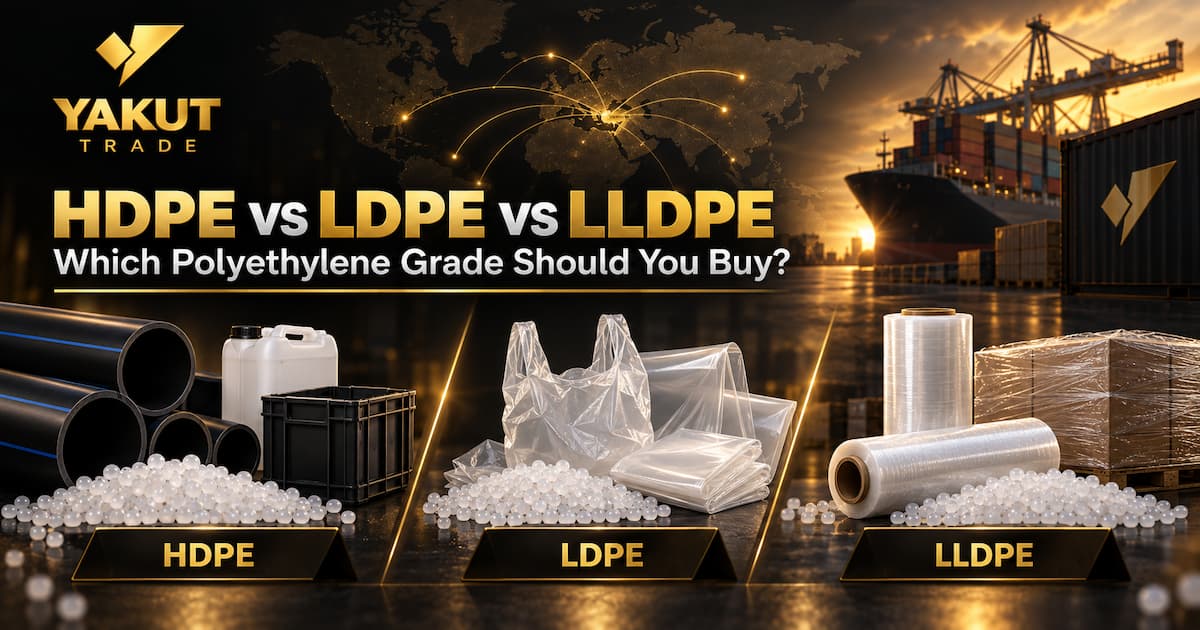
HDPE vs LDPE vs LLDPE: Which Polyethylene Grade Should You Buy?
Choosing the right polyethylene grade is one of the most important decisions in polymer purchasing. HDPE, LDPE and LLDPE have different properties, processing characteristics and applications, making each grade suitable for specific manufacturing requirements.
HDPE vs LDPE vs LLDPE: Understanding the Difference
Polyethylene is one of the most widely used polymers in the world. However, “polyethylene” is not a single material. Different molecular structures create different performance characteristics, which determine how the material behaves during processing and final use.
The three most commonly traded polyethylene categories are:
HDPE
High Density Polyethylene
Known for strength, stiffness and durability.
LDPE
Low Density Polyethylene
Known for flexibility and excellent processing performance.
LLDPE
Linear Low Density Polyethylene
Known for toughness, flexibility and film performance.
The correct choice depends on the final application, production process, required mechanical properties and commercial requirements.
For buyers looking for different polyethylene grades and polymer supply options, Yakut Trade provides access to a structured polymer portfolio for international markets.
Quick Comparison: HDPE vs LDPE vs LLDPE
| Feature | HDPE | LDPE | LLDPE |
|---|---|---|---|
| Density | High | Low | Low to medium |
| Main Characteristic | Strength and rigidity | Flexibility and softness | Toughness and flexibility |
| Common Use | Pipes, containers, industrial products | Films, bags and coatings | Stretch films and packaging |
| Processing | Injection, extrusion, blow molding | Film extrusion and coating | Film extrusion and flexible applications |
Choosing the Right Polyethylene Grade Starts With Your Application
The biggest mistake buyers make is selecting polyethylene based only on price. The correct grade should match the manufacturing process and required product performance.
For Rigid Products
HDPE is commonly selected where higher stiffness, strength and durability are required.
For Flexible Films
LDPE and LLDPE are often preferred for packaging films and flexible applications.
For High Performance Films
LLDPE provides toughness and puncture resistance in many film applications.
HDPE vs LDPE vs LLDPE: Application Comparison
Selecting the right polyethylene grade depends mainly on the final application, production process and required product performance. Each grade provides different advantages for manufacturers and industrial users.
| Application | Recommended Grade | Reason |
|---|---|---|
| Plastic Pipes | HDPE | High strength, durability and resistance to pressure |
| Bottles & Containers | HDPE Blow Molding Grade | Good stiffness and molding performance |
| Shopping Bags & Flexible Packaging | LDPE / LLDPE | Flexibility, film quality and processing advantages |
| Stretch Film | LLDPE | Excellent toughness and puncture resistance |
| Industrial Parts | HDPE Injection Grade | Strength and dimensional stability |
Which Polyethylene Grade Is More Cost Effective?
There is no universally cheaper polyethylene grade because pricing depends on market conditions, availability, producer, origin and technical requirements.
The most cost-effective choice is usually the grade that provides the required performance without unnecessary specifications.
HDPE Cost Consideration
HDPE may provide better value for rigid applications where strength and durability are critical.
LDPE Cost Consideration
LDPE can be suitable where flexibility and processing performance are more important than rigidity.
LLDPE Cost Consideration
LLDPE often delivers strong performance in flexible film applications due to toughness and mechanical properties.
Instead of selecting the lowest-priced material, professional buyers should select the grade that reduces production issues, improves final product quality and meets customer requirements.
Technical Parameters to Check Before Buying Polyethylene
Before purchasing polyethylene, buyers should review important technical parameters to ensure the selected grade matches their production requirements.
Melt Flow Index (MFI)
MFI indicates the flow characteristics of polymer during processing and helps determine suitability for different applications.
Density
Density affects stiffness, strength, flexibility and final product performance.
Mechanical Properties
Impact resistance, tensile strength and durability should match the final application.
A professional RFQ should include technical requirements whenever possible. A request without grade or specification details may result in unsuitable quotations.
How to Choose Between HDPE, LDPE and LLDPE?
The selection process can be simplified by answering a few key questions:
01
What is the final product?
Pipe, film, container, packaging or industrial component?
02
What processing method is used?
Extrusion, injection molding, blow molding or film production?
03
What performance is required?
Flexibility, strength, durability or transparency?
04
What are commercial requirements?
Volume, origin, delivery terms and availability.
Why Work With Yakut Trade for Polyethylene Sourcing?
Selecting the correct polymer grade is only one part of a successful international purchase. Buyers also need reliable commercial coordination, supplier communication and transparent transaction procedures.
Yakut Trade supports companies looking for polyethylene supply opportunities by helping evaluate requirements, identify suitable suppliers and coordinate international commodity transactions.
Our approach combines commodity trading experience with structured sourcing support to help buyers make informed purchasing decisions.
Learn more about our commodity sourcing services and international trade support.
Polyethylene Buyer RFQ Checklist
Before requesting a quotation from a polyethylene supplier, buyers should prepare detailed technical and commercial information. A complete RFQ helps suppliers understand the requirement and provide a more accurate offer.
✓ Required Grade
HDPE, LDPE or LLDPE specification
✓ Application
Final product and manufacturing process
✓ Technical Requirements
MFI, density and required properties
✓ Quantity
Required volume and shipment frequency
✓ Destination
Port or final delivery location
✓ Incoterms
FOB, CFR, CIF or preferred delivery basis
✓ Shipment Timeline
Required delivery schedule
✓ Commercial Terms
Payment structure and transaction requirements
Common Mistakes When Choosing a Polyethylene Grade
Many buyers select polyethylene only based on price. However, choosing the wrong grade can affect production efficiency, product quality and final costs.
Choosing Price Over Performance
The cheapest material may not provide the required technical performance.
Ignoring Application
Each polyethylene grade is designed for specific processing methods.
Not Checking Specifications
MFI, density and technical properties should match production needs.
Comparing Different Grades
HDPE, LDPE and LLDPE cannot be compared only by price per ton.
Supplier Verification Before Polyethylene Purchase
Before entering a bulk polymer transaction, buyers should evaluate supplier credibility, product documentation and commercial capability.
Important verification points include:
- Company identity and registration information
- Commercial experience and market presence
- Product documentation and technical certificates
- Consistency between quotation and supplied documents
- Clear transaction procedures
For buyers requiring additional support before a commercial commitment, Yakut Trade provides
supplier verification services
to support international trade risk evaluation.
Need Help Choosing the Right Polyethylene Grade?
Share your application, required grade, quantity and destination. Yakut Trade can help review suitable polyethylene sourcing opportunities and commercial requirements.
Frequently Asked Questions About HDPE vs LDPE vs LLDPE
Find the Right Polyethylene Solution for Your Business
Whether you need HDPE, LDPE or LLDPE, Yakut Trade can support your international polymer sourcing requirements.